 Dynamo Gills
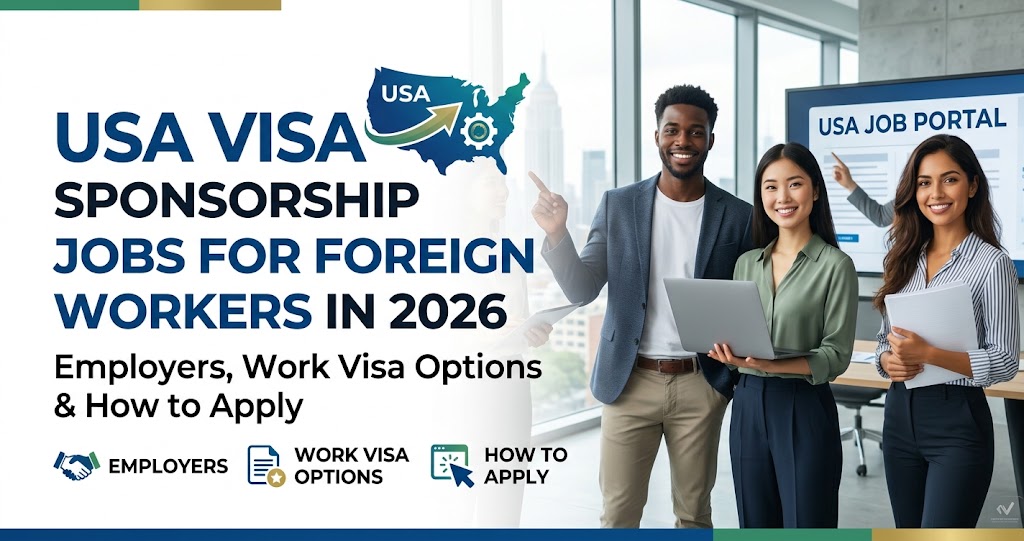
USA visa sponsorship jobs for foreign workers in 2026 remain an important option for international professionals, skilled workers, seasonal workers and other qualified candidates seeking lawful employment in the United States.
However, finding a job advertisement that says “visa sponsorship available” is only the beginning. U.S. employment immigration is governed by specific rules, and the appropriate pathway depends on the occupation, qualifications, employer, duration of employment and type of visa involved.
Some workers may qualify for professional employment categories such as H-1B, while others may fit temporary agricultural or non-agricultural programs such as H-2A and H-2B. Employees already working for multinational organizations may have an L-1 pathway, while individuals with extraordinary ability may qualify for O-1 classification. Permanent employment can involve employment-based immigrant categories and, in many cases, a Department of Labor labor-certification process.
The U.S. Department of State explains that temporary employment visas include several petition-based categories, including H, L, O, P and Q classifications. In many cases, the prospective employer must first obtain approval of a petition before the foreign worker can apply for the visa.
This guide explains how USA visa sponsorship jobs for foreign workers in 2026 work, which employers commonly hire internationally, the major employment visa options, where to search for legitimate opportunities and how to avoid common mistakes and scams.
Important: Visa requirements, government fees, quotas and processing procedures can change. Always verify current requirements with USCIS, the U.S. Department of Labor and the U.S. Department of State before making an immigration or employment decision.
Table of Contents
- What Are USA Visa Sponsorship Jobs?
- How U.S. Employment Visa Sponsorship Works
- Major U.S. Work Visa Options for Foreign Workers
- H-1B Jobs for International Professionals
- H-2A Agricultural Jobs
- H-2B Temporary Non-Agricultural Jobs
- L-1 Jobs With Multinational Companies
- O-1 Jobs for Individuals With Extraordinary Ability
- Employment-Based Permanent Immigration
- Industries That May Hire Foreign Workers
- What Employers Look for in International Candidates
- How to Find USA Visa Sponsorship Jobs in 2026
- How to Apply for a Sponsored Job
- Documents Foreign Workers Should Prepare
- How to Recognize Visa Sponsorship Job Scams
- High-Value Skills That Can Improve Your Job Search
- Frequently Asked Questions
- Final Thoughts
- Official U.S. Government Resources
1. What Are USA Visa Sponsorship Jobs?
A visa sponsorship job generally refers to employment where a U.S. employer is willing and legally able to undertake the immigration-related process required for a foreign national to work in the United States.
The exact process depends on the immigration category.
For example, an employer hiring a qualified professional under H-1B may need to comply with Department of Labor requirements and file a petition with USCIS. By contrast, an employer participating in the H-2A agricultural program must follow a temporary labor-certification process before submitting the relevant immigration petition.
This means that visa sponsorship does not simply mean that a company will pay for an employee’s travel to America.
Sponsorship can involve government filings, labor certifications, petition fees, legal compliance and supporting documentation.
Foreign workers should therefore distinguish between:
- A company that is legally capable of sponsoring workers
- A company that has sponsored workers previously
- A vacancy that is specifically open to international candidates
- A job where sponsorship may become available later
- A position that does not qualify for the applicant’s intended visa category
Understanding this distinction can save applicants considerable time.
2. How U.S. Employment Visa Sponsorship Works
The U.S. employment immigration system involves multiple government agencies.
The U.S. Department of Labor (DOL) administers various foreign-labor certification programs, while U.S. Citizenship and Immigration Services (USCIS) adjudicates immigration petitions. The U.S. Department of State (DOS) handles visa issuance at U.S. embassies and consulates abroad.
A simplified process may look like this:
Foreign worker → U.S. employer → DOL requirements where applicable → USCIS petition → visa application where required → U.S. entry and employment
Not every employment category follows exactly the same sequence.
For example, H-2B employers must obtain an approved temporary labor certification from DOL before filing the immigration petition with USCIS.
For permanent employment, the PERM process can require the employer to obtain labor certification before submitting an employment-based immigrant petition to USCIS.
Therefore, applicants should never assume that receiving a job offer automatically gives them authorization to work in the United States.
3. Major U.S. Work Visa Options for Foreign Workers
There is no single “USA work visa.”
Different employment situations use different immigration classifications.
| Visa Category | General Employment Purpose |
|---|---|
| H-1B | Specialty occupation employment |
| H-2A | Temporary agricultural employment |
| H-2B | Temporary non-agricultural employment |
| L-1 | Intracompany transfer |
| O-1 | Individuals with extraordinary ability |
| E-3 | Certain Australian specialty occupation workers |
| TN | Certain qualified Canadian and Mexican professionals |
| EB-1 | Certain employment-based permanent immigration |
| EB-2 | Certain professionals and individuals with advanced qualifications |
| EB-3 | Skilled workers, professionals and certain other workers |
The U.S. Department of State identifies H, L, O, P and Q among the temporary employment visa groupings, while other employment-based pathways can lead toward permanent residence.
The correct category depends on the applicant’s circumstances rather than simply the salary attached to a job.
4. H-1B Jobs for International Professionals
The H-1B visa is one of the most recognized U.S. employment pathways for foreign professionals.
It is generally associated with specialty occupations requiring highly specialized knowledge and normally requiring at least a bachelor’s degree or equivalent in a relevant specialty.
Common fields can include:
- Software engineering
- Information technology
- Data science
- Cybersecurity
- Engineering
- Financial analysis
- Architecture
- Accounting
- Healthcare-related professional roles
- Scientific research
- Business and management specialties
USCIS describes H-1B employment as involving specialty occupations requiring the theoretical and practical application of highly specialized knowledge and a bachelor’s degree in the specific specialty or equivalent as a minimum entry requirement.
Why H-1B Jobs Are Competitive
H-1B employment is not simply an employer deciding to hire someone from abroad.
The employer has regulatory obligations and must follow the applicable Department of Labor and USCIS procedures.
There are also statutory numerical limitations on many new H-1B workers, making the pathway different from an unrestricted employment authorization system.
For candidates targeting H-1B sponsorship, a strong professional profile is therefore particularly important.
5. H-2A Agricultural Jobs
The H-2A program allows eligible U.S. agricultural employers to hire foreign workers for temporary agricultural work.
Potential occupations can include:
- Farm labor
- Crop harvesting
- Planting
- Agricultural equipment-related work
- Nursery and greenhouse activities
- Livestock-related seasonal work
The Department of Labor administers the H-2A temporary agricultural labor-certification program. Employers generally have to complete required steps before filing a petition with USCIS.
The process includes requirements concerning job orders, temporary employment certification and recruitment.
Foreign workers should be particularly cautious about anyone demanding large recruitment payments or promising guaranteed agricultural visas.
Applicants should verify the employer and job opportunity through legitimate government or employer sources.
6. H-2B Temporary Non-Agricultural Jobs
The H-2B program is another significant route for temporary foreign workers.
Unlike H-2A, H-2B concerns temporary non-agricultural employment.
Potential industries can include:
- Hospitality
- Landscaping
- Resorts
- Tourism
- Seasonal services
- Food service
- Certain construction-related activities
- Forestry
- Maintenance
- Other temporary labor or services
The Department of Labor states that H-2B employment must be temporary and that employers must satisfy specific labor-certification requirements. The program also contains protections intended to prevent adverse effects on the wages and working conditions of similarly employed U.S. workers.
The H-2B program also has statutory numerical limits, so applicants should not interpret the existence of an H-2B job advertisement as a guarantee that a visa will be available.
7. L-1 Jobs With Multinational Companies
The L-1 visa can be particularly relevant to professionals already working for multinational companies.
It allows qualifying companies to transfer certain employees from an affiliated foreign office to a U.S. office.
L-1A generally covers qualifying executives and managers, while L-1B applies to employees with specialized knowledge.
USCIS explains that the classification can involve a transfer from a foreign office to a U.S. office of the same qualifying organization or related entity.
This makes multinational employment an important long-term strategy for some international professionals.
For example, an individual might work for a multinational organization outside the United States, develop specialized knowledge or move into a qualifying managerial position, and later become eligible for a U.S. transfer if the statutory requirements are satisfied.
8. O-1 Jobs for Individuals With Extraordinary Ability
The O-1 classification is intended for individuals who meet the applicable extraordinary-ability criteria in fields such as sciences, education, business, arts or athletics.
This can be relevant to highly accomplished:
- Researchers
- Entrepreneurs
- Scientists
- Artists
- Technology professionals
- Academics
- Athletes
- Business professionals
It is not simply a high-income visa.
Applicants need evidence supporting the applicable eligibility requirements.
USCIS identifies O-1 among the employment-based nonimmigrant classifications available for qualified foreign nationals.
Candidates considering this route should review the current USCIS requirements rather than relying on generic claims made by job websites.
9. Employment-Based Permanent Immigration
Some foreign workers are interested not merely in temporary employment but in eventually obtaining permanent residence.
Employment-based immigrant categories include several preference classifications.
The EB-3 category, for example, covers skilled workers, professionals and certain other workers.
USCIS materials explain that EB-3 can cover skilled workers whose jobs require at least two years of training or experience, professionals with qualifying bachelor’s degrees and certain other workers performing qualifying permanent employment.
For many PERM-based cases, the employer must first obtain labor certification from the Department of Labor.
The DOL explains that the purpose of the PERM process includes establishing that there are not sufficient U.S. workers who are able, willing, qualified and available for the relevant job opportunity and that hiring the foreign worker will not adversely affect similarly employed U.S. workers’ wages and working conditions.
This is one reason permanent employment sponsorship can take substantially longer than a normal hiring process.
10. Industries That May Hire Foreign Workers
There is no universal list of companies that sponsor every foreign worker.
Sponsorship practices can vary according to occupation, location, business requirements and immigration category.
Nevertheless, international candidates commonly research opportunities in sectors such as:
Technology
Technology employers may recruit for:
- Software development
- Cloud engineering
- Data engineering
- Cybersecurity
- Artificial intelligence
- Systems architecture
- Database administration
Healthcare
International recruitment can occur in healthcare occupations where the candidate meets the applicable professional licensing and immigration requirements.
Potential areas include:
- Nursing
- Medical research
- Specialized healthcare
- Healthcare technology
- Laboratory science
Engineering
Engineering remains another area worth researching, including:
- Civil engineering
- Mechanical engineering
- Electrical engineering
- Industrial engineering
- Software engineering
- Environmental engineering
Finance and Professional Services
Candidates may also investigate:
- Financial analysis
- Accounting
- Risk management
- Consulting
- Actuarial work
- Business analytics
Hospitality and Seasonal Services
Temporary employment programs may be relevant to qualifying positions in:
- Hotels
- Resorts
- Tourism
- Landscaping
- Seasonal services
- Food service
The important point is that the job itself must fit the applicable immigration requirements. A company operating in a high-demand industry does not automatically sponsor every occupation.
11. What Employers Look for in International Candidates
Foreign workers competing for U.S. sponsorship should focus on qualifications that are easy for an employer to evaluate.
Important factors can include:
Relevant education
For professional positions, employers may require specific academic qualifications.
Demonstrated experience
A strong employment history can help establish that the candidate is capable of performing the position.
Specialized skills
Skills that are difficult to source locally may be particularly valuable to employers, although immigration eligibility remains a separate issue.
Professional certifications
Depending on the occupation, certifications can strengthen a candidate’s profile.
English communication
Strong professional communication can be important for interviews and workplace performance.
Evidence of results
Instead of listing responsibilities only, describe measurable achievements.
For example:
Weak:
“Responsible for managing company software.”
Stronger:
“Managed a cloud migration project that reduced infrastructure costs and improved system availability.”
The second version gives an employer a clearer picture of the candidate’s contribution.
12. How to Find USA Visa Sponsorship Jobs in 2026
A successful search should combine general employment platforms with employer career pages and government resources.
Start with the occupation
Instead of searching only for:
“USA visa sponsorship jobs”
try combining the occupation with sponsorship-related terms.
Examples include:
- “software engineer visa sponsorship”
- “registered nurse visa sponsorship”
- “data scientist H-1B sponsorship”
- “engineering jobs sponsorship USA”
- “H-2B seasonal jobs”
- “international worker sponsorship”
- “U.S. employer sponsorship”
This can produce more targeted results.
Research employers directly
Visit the official careers pages of companies that interest you.
Look for language such as:
- Visa sponsorship available
- Sponsorship considered
- Immigration sponsorship
- H-1B sponsorship
- Employment-based immigration
- International candidates
Remember that wording differs between employers.
Use government resources
The Department of Labor’s Office of Foreign Labor Certification provides information and public disclosure data covering programs including PERM, H-1B-related labor condition applications, H-2A and H-2B.
This can help applicants better understand the employers and occupations appearing in U.S. foreign-labor programs.
13. How to Apply for a Sponsored Job
A practical application strategy can be divided into seven steps.
Step 1: Identify your immigration pathway
Determine whether your background potentially fits H-1B, H-2A, H-2B, L-1, O-1, an employment-based immigrant category or another appropriate classification.
Do not select a visa simply because it appears frequently in online job advertisements.
Step 2: Build a targeted U.S.-style resume
Keep your resume focused on measurable achievements, relevant skills and professional experience.
For many professional jobs, two pages can be sufficient, although experienced candidates may need additional space.
Step 3: Identify sponsorship-friendly employers
Research the employer’s official careers page and available job descriptions.
Step 4: Apply to positions matching your qualifications
Do not apply randomly to hundreds of unrelated jobs.
A targeted application can be much more effective than a generic application.
Step 5: Be transparent about work authorization
If an application asks whether you currently have authorization to work in the United States, answer accurately.
Do not claim to have employment authorization when you do not.
Step 6: Discuss sponsorship professionally
If the employer has not clearly addressed sponsorship, you can ask during the appropriate stage of the recruitment process whether the company considers sponsorship for the position.
Step 7: Verify the immigration process
If you receive an offer, determine exactly what immigration category the employer intends to use.
The Department of State explains that petition-based temporary workers generally need an approved petition before applying for the corresponding visa.
14. Documents Foreign Workers Should Prepare
Depending on the job and visa category, applicants may need documents such as:
- Valid passport
- Professional resume
- Educational certificates
- Academic transcripts
- Employment reference letters
- Professional licenses
- Professional certifications
- Portfolio
- Evidence of work experience
- Employment offer or contract
- Immigration forms
- Petition information
- Visa application documents
For temporary worker visa applications, the Department of State lists items such as a passport, DS-160 confirmation, applicable fee receipt, photograph and petition receipt information among the documents applicants may need.
The exact documentation varies by visa classification and individual circumstances.
15. How to Recognize Visa Sponsorship Job Scams
This is one of the most important sections for international job seekers.
A legitimate employer does not need to promise that a visa is guaranteed simply because you pay money.
Be cautious when someone:
- Guarantees visa approval
- Guarantees a U.S. job without an interview
- Demands money to “reserve” a job
- Requests payment through cryptocurrency
- Uses only WhatsApp or social media for recruitment
- Refuses to identify the U.S. employer
- Sends an offer letter with obvious errors
- Claims to have special access to the U.S. embassy
- Requests sensitive identity documents before establishing legitimacy
- Promises a specific immigration result for a fee
The Department of Labor publishes foreign-labor program information and maintains resources concerning foreign labor recruiters.
Applicants should independently verify the employer, job vacancy and immigration process.
Never assume that a document bearing a company logo is genuine.
16. High-Value Skills That Can Improve Your Job Search
Candidates interested in international employment may want to develop skills with strong employer demand.
Potential areas include:
Technology and cybersecurity
- Cloud computing
- Cybersecurity
- Data engineering
- Artificial intelligence
- Machine learning
- Software development
- DevOps
Healthcare
- Nursing
- Medical technology
- Healthcare administration
- Specialized clinical fields
Engineering
- Electrical engineering
- Mechanical engineering
- Civil engineering
- Industrial engineering
- Energy-related engineering
Business and finance
- Financial analysis
- Accounting
- Risk management
- Business intelligence
- Data analytics
The goal should not simply be to chase a “high-paying visa job.”
A better approach is to develop skills that are relevant to a real occupation, build evidence of competence and then identify immigration categories for which the employment may qualify.
17. Frequently Asked Questions
Can a foreigner get a job in the USA with visa sponsorship in 2026?
Yes, foreign nationals can obtain U.S. employment through qualifying immigration pathways, provided the employer, position and worker satisfy the requirements of the applicable category.
However, sponsorship is not automatic and a job offer alone does not guarantee visa approval.
Which U.S. visa is commonly used for professional jobs?
H-1B is one of the principal temporary employment classifications associated with specialty occupations. Other categories may apply depending on the worker’s nationality, employer relationship, achievements and occupation.
Can seasonal workers receive U.S. visa sponsorship?
Some seasonal workers may qualify for programs such as H-2A or H-2B when the employer and job meet the applicable requirements.
Can a company sponsor a foreign worker for permanent residence?
In qualifying circumstances, a U.S. employer may sponsor a foreign worker through an employment-based immigrant category.
Some cases require a Department of Labor labor certification before the employer proceeds with the USCIS immigrant petition.
Do I have to pay an employer for visa sponsorship?
Applicants should be extremely cautious about anyone demanding money in exchange for a guaranteed U.S. job or guaranteed visa.
Immigration costs and who is legally responsible for particular fees can vary by program. Applicants should verify payment requirements using official government information and, where appropriate, qualified immigration counsel.
Can I apply for U.S. jobs while living outside America?
Yes. International candidates can apply to U.S. employers from abroad. Whether the employer will sponsor the applicant depends on the job, company and applicable immigration category.
Does a high salary guarantee visa sponsorship?
No.
Salary can be relevant to certain immigration and labor requirements, but a high salary does not automatically make someone eligible for a U.S. work visa.
Can I work in America on a tourist visa?
A tourist visa is not a general work authorization.
Foreign workers should obtain the appropriate immigration status or authorization before undertaking employment.
18. Final Thoughts
USA visa sponsorship jobs for foreign workers in 2026 can provide legitimate opportunities for qualified international candidates, but the process requires more than finding a job advertisement that mentions sponsorship.
The most important step is matching your professional profile with an immigration category that actually fits the position.
Professionals may research H-1B opportunities, multinational employees may investigate L-1 eligibility, highly accomplished individuals may examine O-1 requirements, and certain temporary workers may find relevant opportunities through H-2A or H-2B employers.
Candidates interested in permanent employment should also understand employment-based immigrant categories and the Department of Labor’s labor-certification requirements.
Most importantly, verify immigration information through official U.S. government sources.
The U.S. Department of Labor, USCIS and U.S. Department of State should be your primary sources for requirements, forms, procedures and changes to immigration programs.
A strong international job search combines three things: relevant skills, legitimate employers and an immigration pathway that fits the actual employment situation.
Do not pay an unknown recruiter simply because they promise a guaranteed visa. Do not rely on outdated social-media posts for immigration requirements. And do not assume that every U.S. job is eligible for sponsorship.
Instead, research the employer, understand the position, verify the visa category and consult official government information before taking the next step.
19. Official U.S. Government Resources
U.S. Department of State — Employment Visas:
U.S. Department of State Employment Visa Information
Temporary Worker Visas:
U.S. Department of State Temporary Worker Visas
U.S. Citizenship and Immigration Services (USCIS):
USCIS Working in the United States
U.S. Department of Labor — Foreign Labor Certification:
DOL Foreign Labor Certification
H-2A Temporary Agricultural Program:
DOL H-2A Program
H-2B Temporary Non-Agricultural Program:
DOL H-2B Program
PERM Permanent Labor Certification:
DOL FLAG PERM Program
Author
Dynamo Gills
Writer & Researcher at Jobs Biodynasty

 Dynamo Gills