 Dynamo Gills
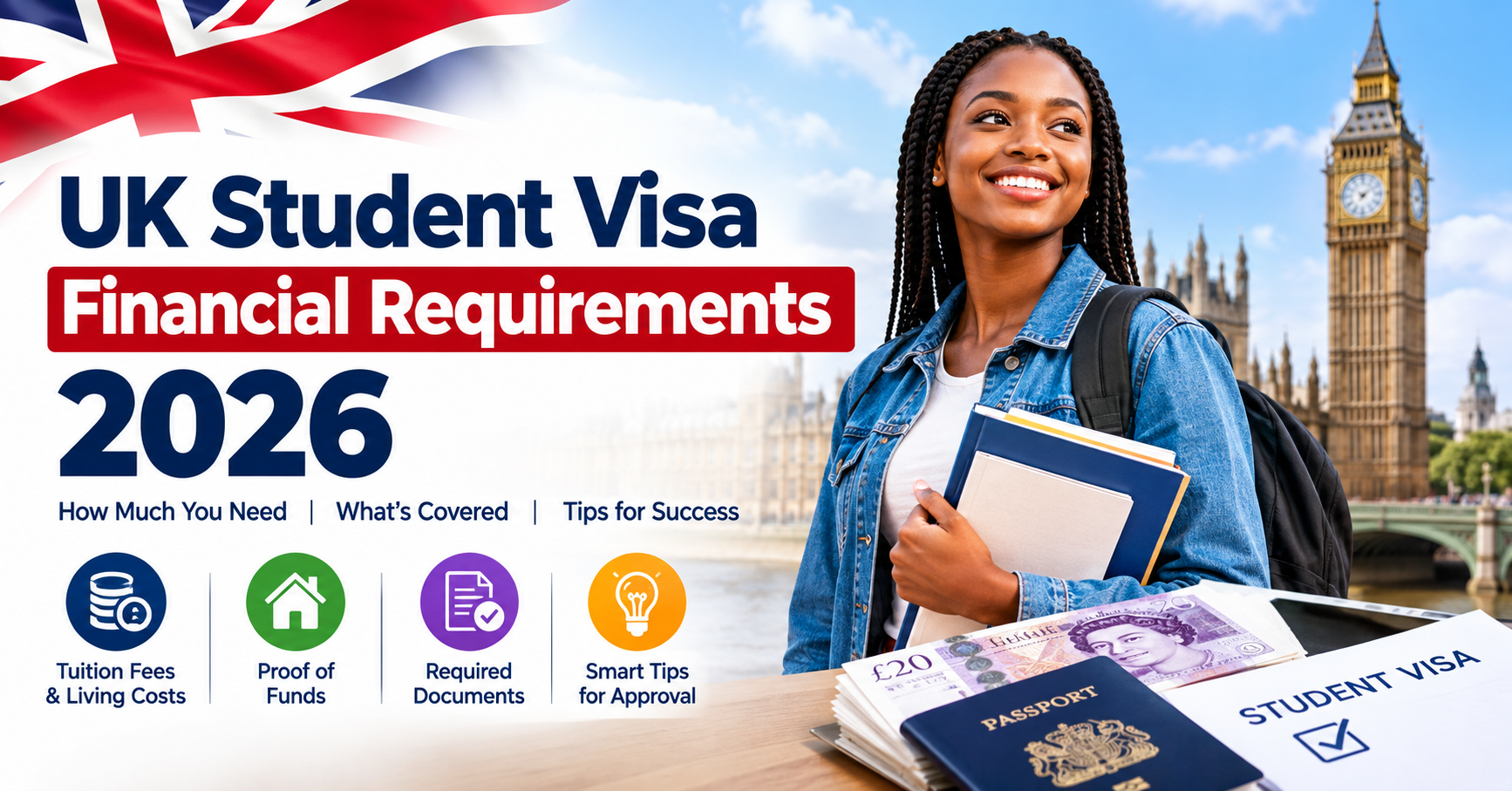
Meeting the UK Student Visa Financial Requirements is one of the most critical steps in securing approval to study in the United Kingdom. UK Visas and Immigration (UKVI) enforces precise financial thresholds and strict documentary evidence rules that every international applicant must follow.
Whether you are applying for an undergraduate degree or a postgraduate program, this guide breaks down the updated maintenance funds, accepted sources for proof of funds, and the strict bank statement guidelines required for 2026.
Applying for a UK Student Visa is an exciting step toward studying at one of the world’s leading universities. However, one of the most important parts of the application is proving that you have enough money to support yourself throughout your studies.
Every year, thousands of student visa applications are delayed or refused because applicants misunderstand the financial requirements. In many cases, the issue is not that students lack sufficient funds—it is that the evidence submitted does not meet the UK Home Office’s rules.
If you are planning to study in England, Scotland, Wales, or Northern Ireland in 2026, understanding the latest maintenance fund requirements and proof of funds rules is essential. This guide explains the current financial requirements in plain language, helping you prepare your application confidently while avoiding common mistakes.
Whether you are funding your education yourself, receiving financial support from your parents, using an education loan, or benefiting from a scholarship, this article will walk you through everything you need to know.
What Are the UK Student Visa Financial Requirements?
The UK Student Visa financial requirement is designed to demonstrate that you have enough money to:
- Pay your tuition fees.
- Cover your living expenses while studying.
- Support any eligible dependants, where applicable.
The UK government wants to ensure international students can support themselves without relying on public funds during their stay. As a result, applicants must provide evidence that they have access to sufficient financial resources before their visa is approved.
In most cases, your financial requirement consists of two separate amounts:
- Outstanding tuition fees for your first academic year (or the full course if it lasts less than one year).
- Required maintenance funds (living expenses).
These amounts are assessed separately and then combined to determine the minimum balance you must show.
UK Student Visa Maintenance Funds for 2026
Maintenance funds refer to the money required to cover your everyday living expenses while studying in the UK.
According to the current UK government guidance, students generally need to show:
| Study Location | Monthly Maintenance Required | Maximum Period |
|---|---|---|
| London | £1,529 per month | Up to 9 months |
| Outside London | £1,171 per month | Up to 9 months |
This means the maximum maintenance requirement is:
- London: £13,761
- Outside London: £10,539
These figures are separate from your tuition fees and apply in addition to any outstanding course costs shown on your Confirmation of Acceptance for Studies (CAS).
How Tuition Fees Affect Your Financial Requirement
Many applicants mistakenly believe they only need to show maintenance funds.
In reality, you must also demonstrate that you can pay your tuition fees.
For example:
Suppose:
- First-year tuition: £18,000
- Tuition already paid: £6,000
- Remaining tuition: £12,000
- Course located in London
- Maintenance requirement: £13,761
Total funds required:
- Tuition: £12,000
- Living expenses: £13,761
Total proof of funds required: £25,761
Your CAS issued by your university will specify:
- Total tuition fees
- Payments already received
- Remaining balance
The Home Office uses this information when assessing your application.
Who Must Show Proof of Funds?
Most international students applying from outside the UK must demonstrate that they meet the financial requirement.
Generally, you must provide evidence if you are:
- Applying for a Student Visa from overseas.
- Beginning a new degree.
- Starting a foundation programme.
- Enrolling in postgraduate studies.
- Transferring to a different educational institution.
Applicants should carefully review their individual circumstances before assuming they are exempt.
Who Is Exempt from Providing Financial Evidence?
Although many students must prepare financial documents, some applicants are exempt.
You may not need to submit financial evidence if:
- You have already lived legally in the UK for at least 12 months before your application.
- You qualify under the UK’s “differential evidence requirement” based on your nationality.
- You are applying under specific exempt categories recognized by the Home Office.
Even where evidence is not required at the time of application, the Home Office may still request supporting financial documents during the assessment process. Applicants should therefore ensure they genuinely meet the financial requirement.
Understanding the 28-Day Rule
The 28-day rule is one of the most important financial requirements for a UK Student Visa.
Many otherwise eligible applicants receive refusals because they misunderstand this rule.
The requirement means:
- Your funds must remain above the required minimum balance.
- The money must stay in your account for 28 consecutive days.
- The balance must never fall below the required amount during those 28 days.
- The financial evidence must generally be dated within 31 days before you submit your visa application.
Example
Suppose your required amount is £25,761.
If your account balance drops to £25,700 for just one day during the 28-day period, you may no longer meet the financial requirement.
This is why applicants are advised to avoid moving money in and out of the account once they begin the 28-day holding period.
What Counts as Proof of Funds?
The UK Home Office accepts several forms of financial evidence, provided they satisfy the official requirements.
Common examples include:
- Personal bank statements.
- Bank letters.
- Official education loan documentation.
- Government sponsorship letters.
- Official scholarship letters.
- Parent or legal guardian financial evidence (with supporting documents).
Not every financial asset is acceptable. Investments, property valuations, shares, or other non-cash assets generally cannot be used to satisfy the maintenance requirement because the funds must be immediately available.
Why Financial Evidence Is Carefully Reviewed
Financial evidence is one of the most closely examined sections of a Student Visa application.
Visa officers typically verify:
- Whether the required amount has been maintained for the full qualifying period.
- Whether the account belongs to an eligible person.
- Whether the documents are genuine.
- Whether tuition payments shown on your CAS match your financial evidence.
- Whether any sponsorship or scholarship documentation is authentic.
Providing inconsistent information can result in processing delays or refusal, even if you have sufficient funds.
Common Mistakes That Lead to Student Visa Refusals
Many financial refusals occur because applicants overlook small but important details.
Some of the most common mistakes include:
- Allowing the account balance to fall below the required amount during the 28-day period.
- Using bank statements that are too old.
- Miscalculating tuition fees.
- Forgetting to deduct tuition already paid as shown on the CAS.
- Submitting incomplete financial documents.
- Relying on assets that are not accepted as cash funds.
- Assuming that sponsorship letters automatically replace financial evidence without meeting the required conditions.
Most of these issues can be avoided with careful preparation and by reviewing the official guidance before submitting your application.
Why Preparing Early Matters
Financial preparation should begin well before you submit your visa application.
Starting early gives you enough time to:
- Calculate the correct amount.
- Arrange tuition payments.
- Complete the required 28-day holding period.
- Obtain updated bank statements.
- Correct any errors before applying.
Students who leave financial preparation until the final weeks often encounter avoidable delays that may affect their planned travel dates or university enrolment.
Acceptable Financial Documents for a UK Student Visa
Meeting the financial requirement is only half of the process. You must also provide documents that satisfy the UK Home Office’s evidence standards. Documents that are incomplete, outdated, or inconsistent with your application can lead to delays or refusal.
Depending on your circumstances, acceptable financial evidence may include:
- Personal bank statements.
- Official bank letters.
- Building society passbooks or statements (where applicable).
- Confirmation of an approved education loan.
- Official government sponsorship letters.
- Scholarship or bursary award letters.
- Financial documents from a parent or legal guardian, together with the required supporting evidence.
The documents should clearly identify the account holder, financial institution, account balance, and relevant dates. Any document that is not in English or Welsh generally needs to be accompanied by a certified translation that meets the Home Office’s requirements.
Bank Statements: What They Should Include
Bank statements are the most commonly used form of financial evidence.
A compliant statement generally contains:
- The account holder’s full name.
- The bank or financial institution’s name and logo.
- The account number or a clear identifier.
- The statement date.
- The closing balance.
- A transaction history showing that the required funds were maintained for the qualifying period.
Digital statements are often acceptable if they are issued directly by the bank and contain all required information. If your bank provides downloadable electronic statements, ensure they appear complete and unaltered.
Avoid editing or combining statements yourself. Any indication that a document has been modified may result in additional scrutiny.
Can You Use Your Parents’ Bank Account?
Yes. Many international students rely on financial support from their parents or legal guardians.
If you are using a parent’s account, you will generally need to provide:
- The parent’s bank statement.
- A signed letter confirming they are financially supporting your studies.
- Evidence of your relationship, such as an official birth certificate or another accepted legal document.
If your legal guardian is providing the funds, you may also need documentation establishing the guardianship.
The Home Office must be able to clearly link the account holder to you and confirm that the funds are genuinely available for your education.
Using an Education Loan
Many students finance their studies through an education loan from a recognized financial institution.
An education loan can usually be accepted if it:
- Is issued by an approved financial institution.
- Is available before you travel to the UK.
- Covers eligible education expenses.
- Clearly identifies the borrower and loan amount.
The official loan document should normally include:
- The lender’s details.
- Your name.
- The approved loan amount.
- The issue date.
- Confirmation that the funds are available for your studies.
Applicants should ensure the loan documentation matches the Home Office’s current requirements before submitting their application.
Scholarships and Financial Sponsorship
Scholarships can significantly reduce the amount of personal funds you need to demonstrate.
If your scholarship covers:
- Tuition fees,
- Living expenses,
- Or both,
the official scholarship letter should clearly state:
- Your full name.
- The sponsor’s name.
- The amount awarded.
- What expenses are covered.
- The duration of the sponsorship.
Only the portion of your costs that is not covered by the scholarship generally needs to be demonstrated through personal funds.
Official Government Sponsorship
Some students receive funding from:
- National governments.
- International organizations.
- Universities.
- Public institutions.
Government sponsorship letters should typically specify:
- Your name.
- The sponsoring organization.
- The financial support provided.
- Whether tuition, maintenance, or both are covered.
- The sponsor’s contact details.
Applicants who are partially sponsored must usually demonstrate funds for any remaining costs not covered by the sponsor.
Which Bank Accounts Are Acceptable?
Not every bank account automatically qualifies.
Generally, the funds should be held in an account that allows immediate access to the money. Current accounts and savings accounts are commonly used.
Depending on the circumstances, certain investment products or accounts with restrictions on withdrawals may not satisfy the financial evidence requirements.
Before relying on a particular account type, review the latest Home Office guidance or confirm with your financial institution that the funds are readily accessible.
Currency Conversion Rules
Many applicants hold their savings in currencies other than British pounds.
The Home Office assesses whether the value of your funds meets the required amount in pounds sterling. Exchange rate movements can affect whether your balance remains sufficient.
To reduce the risk of falling below the required threshold:
- Maintain a financial buffer above the minimum requirement.
- Avoid calculating your balance using unofficial exchange rates.
- Monitor exchange rate fluctuations during the 28-day period and before submitting your application.
Keeping additional funds beyond the minimum can help protect against currency volatility.
Can Fixed Deposits Be Used?
Whether a fixed deposit or similar financial product is acceptable depends on whether the funds can be accessed in accordance with the Home Office’s financial evidence rules.
If the money cannot be withdrawn when needed or is otherwise restricted, it may not satisfy the maintenance requirement.
Students should carefully review the official guidance before relying on fixed-term investments as proof of funds.
Step-by-Step Proof of Funds Checklist
Preparing your financial evidence systematically can reduce the likelihood of mistakes.
Before submitting your application, consider the following checklist:
- Calculate your outstanding tuition fees using your CAS.
- Determine the required maintenance funds for your study location.
- Add both amounts together.
- Ensure the required funds remain available for the full qualifying period.
- Obtain compliant financial documents.
- Verify that all names, dates, balances, and account details are correct.
- Gather any supporting documents required for parental support, scholarships, or sponsorship.
- Check whether certified translations are needed.
- Review your documents carefully before uploading them with your application.
Practical Example 1
Student studying in London
Outstanding tuition fees: £15,000
Maintenance requirement: £13,761
Total funds required:
- Tuition: £15,000
- Living expenses: £13,761
Total: £28,761
The applicant would generally need to demonstrate that this amount has been maintained in accordance with the applicable financial evidence rules.
Practical Example 2
Student studying outside London
Outstanding tuition fees: £9,500
Maintenance requirement: £10,539
Total required:
- Tuition: £9,500
- Maintenance: £10,539
Total: £20,039
If the student has received a scholarship covering £5,000 of the tuition fees and this is confirmed on the CAS or through acceptable evidence, the remaining financial requirement would be adjusted accordingly.
Frequently Asked Questions
Do I have to show money if I already paid my tuition?
If your tuition payment is recorded on your Confirmation of Acceptance for Studies (CAS), you generally only need to demonstrate the remaining outstanding tuition amount together with the required maintenance funds.
Can someone else sponsor me financially?
Yes. Depending on your circumstances, financial support may come from a parent, legal guardian, government sponsor, scholarship provider, or another eligible source recognised under the Student visa rules. Additional documentation is usually required to support these arrangements.
Can I use multiple bank accounts?
In some cases, applicants may rely on more than one qualifying account if the combined funds satisfy the financial requirement and each account meets the Home Office’s evidence standards. Ensure the documentation clearly supports the total amount claimed.
What happens if exchange rates change?
If exchange rate movements reduce the sterling value of your funds below the required threshold, your application could be affected. Maintaining a reasonable financial buffer can help reduce this risk.
Do dependants have separate financial requirements?
Yes. Eligible dependants may need to meet additional maintenance fund requirements. The amount depends on the applicable immigration rules and the dependant’s circumstances.
Tips to Strengthen Your Application
Although every application is assessed individually, these practical steps can help you prepare a stronger financial submission:
- Start arranging your finances well before applying.
- Keep your funds stable during the qualifying period.
- Double-check that your CAS reflects any tuition payments already made.
- Ensure supporting letters are current and complete.
- Review all documents for consistency before submission.
- Retain copies of every document you upload.
Taking time to prepare accurate financial evidence can help reduce avoidable delays and make the application process smoother.
Additional Financial Mistakes Applicants Often Overlook
While most applicants understand the importance of meeting the minimum financial requirement, smaller administrative mistakes can also create problems. Paying close attention to detail can help avoid unnecessary delays.
Some commonly overlooked issues include:
- Using a bank statement that does not cover the required qualifying period.
- Uploading documents that are difficult to read or incomplete.
- Forgetting to include supporting documents when relying on parental funds.
- Assuming that an education loan approval alone is enough when additional documentation is required.
- Failing to ensure that names on financial documents match those on the passport and visa application.
- Waiting until the last minute to gather financial evidence.
Carefully reviewing every document before submission can reduce the likelihood of requests for additional information.
What Happens If the Home Office Requests More Information?
In some cases, the UK Home Office may contact an applicant to clarify aspects of the application or request additional documentation.
If this happens:
- Read the request carefully.
- Respond within the specified deadline.
- Provide only accurate and genuine documents.
- Ensure any additional evidence is consistent with your original application.
A prompt and accurate response can help keep your application moving through the assessment process.
Preparing Your Finances Before Applying
Good financial planning is one of the most effective ways to reduce stress during the visa process.
Consider these practical steps:
Start Saving Early
If you are planning to study in the UK, begin building your education fund well in advance. This allows you to meet the maintenance requirement comfortably and complete the required holding period.
Keep Records Organised
Create a folder—digital or physical—for important documents, including:
- Passport.
- Confirmation of Acceptance for Studies (CAS).
- Tuition payment receipts.
- Bank statements.
- Scholarship letters.
- Sponsorship letters.
- Education loan documents.
- Certified translations, where required.
Having everything in one place makes it easier to complete your application accurately.
Allow Time for Unexpected Delays
Banks, sponsors, and universities may need time to issue official documents. Starting early helps avoid last-minute problems that could delay your application or travel plans.
UK Student Visa Financial Checklist for 2026
Before submitting your Student Visa application, use this checklist to confirm that you are prepared:
- □ Confirm your outstanding tuition fees on your CAS.
- □ Calculate the correct maintenance funds for your study location.
- □ Ensure your funds meet the required amount.
- □ Maintain the required balance for the qualifying period.
- □ Obtain compliant financial documents.
- □ Verify that all names and account details are correct.
- □ Include evidence for parental support, scholarships, or sponsorship where applicable.
- □ Arrange certified translations if necessary.
- □ Review your complete application before submission.
- □ Keep copies of every document for your records.
Completing these checks before applying can help minimise avoidable errors.
Frequently Asked Questions
Can I submit my visa application before completing the required financial holding period?
Generally, your financial evidence must satisfy the applicable Home Office requirements before you submit your application. Applying too early could result in your documents not meeting the required standard.
Is a digital bank statement acceptable?
Many banks issue official electronic statements that are acceptable, provided they contain all required information and comply with the Home Office’s guidance. If you are unsure, check with your bank or review the latest official requirements.
Should I keep more money than the minimum requirement?
Many applicants choose to maintain a financial buffer above the minimum requirement. While the Home Office specifies the minimum amount that must be demonstrated, having additional funds may help account for currency fluctuations or unexpected banking issues.
What if I receive additional funding after submitting my application?
Any changes to your financial circumstances after submission should be considered carefully. If the Home Office requests updated information, provide accurate documentation that reflects your current situation.
Final Thoughts
Meeting the UK Student Visa financial requirement is about more than simply having enough money in your account. You must also demonstrate that your funds meet the Home Office’s documentary and timing requirements.
Understanding the distinction between tuition fees and maintenance funds, maintaining the required balance for the qualifying period, and preparing accurate supporting documents can significantly improve the quality of your application.
Because immigration rules may be updated over time, always review the latest guidance from the UK government before submitting your visa application. If your circumstances are unusual—such as complex sponsorship arrangements or dependent applications—consider seeking advice from your university’s international student office or a qualified immigration adviser.
With careful preparation and accurate documentation, you can approach your application with greater confidence and focus on the exciting opportunity of studying in the United Kingdom.
Key Takeaways
- Most Student Visa applicants must demonstrate both outstanding tuition fees and maintenance funds.
- Maintenance fund requirements vary depending on whether your institution is in London or outside London.
- Financial evidence must comply with the Home Office’s documentation requirements.
- Applicants using parents’ funds, scholarships, education loans, or sponsorship should provide all required supporting documents.
- Careful preparation and attention to detail can help reduce the risk of avoidable delays or refusals.
- Always verify the latest immigration guidance before submitting your application.
Official resources for prospective applicants
-
GOV.UK: Student Visa – Money You Need The primary official page detailing monthly living cost thresholds for studying inside and outside London, dependants, and tuition fee calculations.
-
GOV.UK: Immigration Rules Appendix Finance The official UK legal framework specifying acceptable financial accounts, held-funds durations, conversion rates, and documentary standards.
-
GOV.UK: Student Route Caseworker Guidance (PDF / HTML) The detailed internal handbook used by UKVI visa officers to assess and verify student maintenance funds, 28-day bank rules, and parent sponsorship documents.
-
GOV.UK: Student Visa – Documents You Must Provide Official guidance on supporting documents required for your visa application, including financial letters, CAS references, and parental consent letters.
-
GOV.UK: Financial Evidence for Student Visa Applications Guidance Detailed official breakdown explaining acceptable financial evidence (bank statements, building society passbooks, official sponsorship letters, and government loans).
Dynamo Gills
Writer & Researcher at Jobs Biodynasty
Dynamo Gills writes practical career, business, international employment and professional development content designed to help readers make informed decisions about work and entrepreneurship.

 Dynamo Gills