 Dynamo Gills
Studying in the United Kingdom remains a dream for thousands of students worldwide, but tuition fees and living expenses can make higher education seem financially out of reach. Fortunately, scholarships offered through the University of London and its member institutions help reduce these financial barriers for talented students from different countries.
If you’re planning to study in the UK in 2027, understanding how scholarships work is just as important as meeting the academic requirements. Many qualified applicants miss funding opportunities simply because they apply too late, submit incomplete documents, or misunderstand the eligibility criteria.
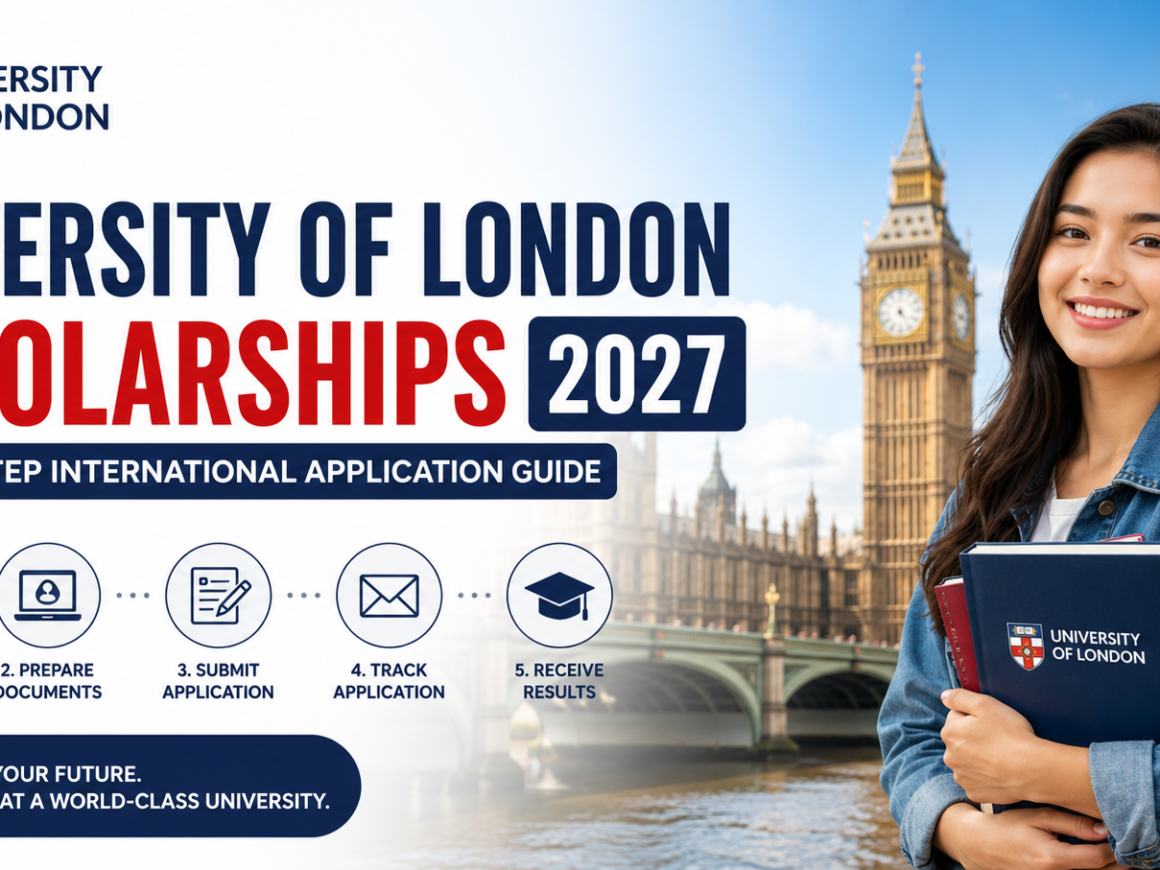
This guide explains everything international students need to know about University of London Scholarships 2027, including available scholarship opportunities, eligibility requirements, application preparation, required documents, and practical strategies that can improve your chances of receiving financial support.
Whether you’re applying for an undergraduate, master’s, or doctoral programme, this guide will help you prepare a stronger scholarship application while following official admission procedures.
Why Study at the University of London?
The University of London is one of the UK’s oldest and most respected higher education institutions. Rather than functioning as a single campus, it is a federal university made up of several renowned member institutions, each offering specialised academic programmes.
International students choose the University of London because it offers:
- Globally recognised qualifications
- High academic standards
- Extensive research opportunities
- Diverse student communities
- Flexible learning options
- Excellent graduate employability
- Access to internationally respected faculty members
Graduates from University of London institutions often find opportunities in government, healthcare, finance, technology, education, engineering, international development, and many other industries around the world.
Understanding University of London Scholarships
A scholarship is financial assistance awarded to students based on merit, financial need, leadership, research potential, or other specific criteria.
Scholarships can significantly reduce the overall cost of studying in the UK by covering expenses such as:
- Tuition fees
- Accommodation
- Living expenses
- Books and study materials
- Research costs
- Travel expenses (for selected awards)
- Health-related costs in certain scholarship programmes
Some scholarships cover the full cost of study, while others provide partial funding. The amount awarded depends on the scholarship programme and the institution offering it.
University of London Scholarships
Types of University of London Scholarships Available in 2027
Although scholarship opportunities vary each academic year, international applicants can generally expect several categories of funding.
1. Merit-Based Scholarships
These scholarships reward students with outstanding academic achievements.
Typical considerations include:
- Excellent grades
- Strong academic record
- Research achievements
- Academic awards
- Publications (for postgraduate applicants)
Merit scholarships are highly competitive because they attract applicants from around the world.
2. Need-Based Scholarships
Some funding opportunities focus on students who demonstrate genuine financial need.
Applicants may be required to provide documentation such as:
- Household income information
- Financial statements
- Sponsor declarations
- Bank statements
- Supporting financial documents
Need-based funding helps students who might otherwise be unable to pursue higher education.
3. Country-Specific Scholarships
Some scholarships are designed for applicants from particular countries or regions.
These awards encourage educational diversity and support students from developing economies or underrepresented regions.
Eligibility often depends on:
- Nationality
- Country of residence
- Academic background
- Programme of study
4. Research Scholarships
Research students pursuing master’s by research or doctoral programmes may qualify for specialised funding.
These scholarships usually consider:
- Research proposal quality
- Academic publications
- Research experience
- Supervisor recommendations
- Academic excellence
5. Subject-Specific Scholarships
Certain faculties provide scholarships for students studying areas such as:
- Engineering
- Law
- Computer Science
- Public Health
- Education
- Business
- Economics
- Data Science
- Medicine
- Environmental Studies
Funding availability depends on departmental priorities and available budgets.
6. External Scholarship Opportunities
International students may also combine University of London admission with external scholarships offered by governments, charitable foundations, international organisations, and educational trusts, provided the scholarship terms allow it.
Applicants should always review the conditions attached to each funding programme before accepting an award.
Benefits of Receiving a University of London Scholarship
Winning a scholarship provides more than financial support.
Benefits often include:
Reduced Financial Pressure
Scholarships can significantly lower tuition costs and reduce the need for student loans.
Better Academic Focus
Students with financial assistance can spend more time concentrating on coursework rather than worrying about funding.
Enhanced Career Prospects
Scholarship recipients often demonstrate academic excellence and commitment, qualities valued by employers and research institutions.
Access to Professional Networks
Some scholarship programmes include:
- Mentorship
- Career development workshops
- Leadership programmes
- Networking events
- Alumni communities
These opportunities can support long-term professional growth.
Who Can Apply?
Eligibility requirements vary depending on the scholarship, but many opportunities consider several common factors.
Applicants are often expected to demonstrate:
- Strong academic performance
- Admission to an eligible programme
- English language proficiency (where required)
- Compliance with immigration requirements
- Genuine intention to complete the chosen course
- Submission of all required documents before the deadline
Some scholarships may include additional criteria such as leadership experience, community involvement, or research potential.
Undergraduate Scholarship Eligibility
Students applying for bachelor’s degrees generally need:
- Completion of secondary education or an equivalent qualification
- Competitive academic results
- A complete application package
- Supporting academic documents
- Personal statement (if required)
- References (where applicable)
Specific entry requirements depend on the chosen programme and institution.
Postgraduate Scholarship Eligibility
Master’s and doctoral applicants typically need:
- A recognised bachelor’s degree (or equivalent)
- Strong academic performance
- Relevant academic or professional experience, depending on the programme
- Academic references
- Research proposal for research-based programmes
- Supporting documentation requested by the institution
Certain scholarships may also require evidence of leadership, professional achievements, or community engagement.
Preparing Early for the 2027 Scholarship Cycle
Successful scholarship applications often begin months before official deadlines.
Starting early gives applicants enough time to:
- Research suitable programmes
- Compare scholarship opportunities
- Gather academic records
- Prepare financial documents
- Improve English language test scores if necessary
- Request recommendation letters
- Write and revise personal statements
- Prepare a competitive curriculum vitae (CV)
Many applicants underestimate the time needed to collect official documents, particularly if they must be translated or certified.
Documents You Should Begin Preparing
Although requirements differ between programmes, most scholarship applications request similar documentation.
Preparing these documents early can make the application process smoother.
Academic Transcripts
Official transcripts provide evidence of previous academic performance.
Applicants should ensure:
- Documents are complete.
- Grades are clearly displayed.
- Certified translations are available if the originals are not in English.
Degree Certificates
Applicants for postgraduate programmes should have official degree certificates available for submission if required.
Students who have not yet graduated may need to provide provisional documentation issued by their institution.
Passport
A valid passport is essential for international applicants.
Applicants should ensure the passport remains valid for the expected period required during admission and visa processing.
English Language Test Results
Depending on the programme and an applicant’s educational background, accepted evidence of English proficiency may include recognised language test results or other forms of proof specified by the institution.
Applicants should always verify the accepted qualifications and minimum scores for their chosen programme.
Curriculum Vitae (CV)
A strong academic CV typically highlights:
- Education
- Research experience
- Employment history
- Volunteer work
- Awards
- Publications
- Technical skills
- Leadership experience
The document should be concise, accurate, and tailored to the scholarship application.
Personal Statement
One of the most influential parts of a scholarship application is the personal statement.
Rather than simply listing achievements, applicants should explain:
- Why they chose their programme
- Their academic interests
- Career aspirations
- Relevant experiences
- Skills they have developed
- How the scholarship would support their educational goals
A thoughtful, well-organised statement can help reviewers understand the applicant’s motivation and potential.
Letters of Recommendation
Many scholarship programmes require one or more recommendation letters from individuals who can comment on an applicant’s academic or professional abilities.
Suitable referees may include:
- University lecturers
- Academic supervisors
- Employers
- Research mentors
Strong recommendation letters are specific, evidence-based, and submitted before the application deadline.
Financial Documents
Need-based scholarships may request documentation demonstrating an applicant’s financial circumstances.
Depending on the scholarship, this may include:
- Income statements
- Bank records
- Sponsorship letters
- Financial declarations
- Other supporting evidence requested during the application process
Applicants should ensure all documents are accurate, complete, and consistent with the information provided elsewhere in their application.
Step-by-Step Guide to Applying for University of London Scholarships in 2027
A successful scholarship application involves more than meeting the minimum eligibility requirements. Careful planning, attention to detail, and timely submission can improve the quality of your application.
The following steps outline a typical process that international students can follow. Because scholarship requirements vary by programme and institution, always confirm the latest details on the official University of London and relevant member institution websites before applying.
Step 1: Research Your Preferred Programme
Begin by identifying the degree programme that aligns with your academic background and career goals.
When comparing programmes, consider:
- Course content
- Duration
- Entry requirements
- Tuition fees
- Available scholarships
- Career outcomes
- Research opportunities
- Internship or placement options
Take time to read the programme description carefully so you understand the academic expectations and any additional admission requirements.
Step 2: Check Scholarship Eligibility
Not every scholarship is open to every applicant. Review the eligibility criteria for each funding opportunity before investing time in the application.
Common eligibility factors include:
- Nationality
- Academic qualifications
- Degree level
- Programme of study
- Financial circumstances (for need-based awards)
- Leadership or community involvement
- Research experience (where applicable)
Applying only for scholarships you are eligible for helps you focus your efforts more effectively.
Step 3: Confirm Application Deadlines
Scholarship deadlines often differ from programme admission deadlines.
Create a calendar that includes:
- Admission application deadline
- Scholarship deadline
- Document submission deadlines
- Reference submission dates
- English language test deadlines
- Interview dates, if applicable
Submitting early can reduce the risk of technical issues or delays with document processing.
Step 4: Prepare a Strong Personal Statement
The personal statement gives the selection committee insight into who you are beyond your grades.
A strong statement should explain:
- Why you chose the programme
- Why you selected the University of London
- Your academic achievements
- Professional or volunteer experience
- Future career goals
- How the scholarship will support your educational plans
Rather than making broad claims, use specific examples to demonstrate your skills, commitment, and achievements.
Step 5: Obtain Quality Recommendation Letters
Recommendation letters carry more weight when they come from individuals who know your academic or professional work well.
Choose referees who can discuss:
- Academic ability
- Research skills
- Leadership qualities
- Professionalism
- Communication skills
- Character
- Potential for success
Provide your referees with sufficient notice so they have adequate time to prepare thoughtful and detailed letters.
Step 6: Complete the Admission Application Carefully
Many scholarship applications require applicants to first submit an admission application.
When completing your application:
- Use accurate personal information.
- Ensure names match official documents.
- Upload the correct files.
- Review every section before submission.
- Save copies of all submitted documents.
Small errors, such as incorrect dates or missing information, can delay the assessment process.
Step 7: Submit Supporting Documents
Most scholarship applications require several supporting documents.
Double-check that each document:
- Is legible
- Is complete
- Meets formatting requirements
- Is uploaded in the requested file format
- Is submitted before the deadline
Incomplete applications may not proceed to further assessment.
Step 8: Prepare for Possible Interviews
Some competitive scholarships include an interview stage.
Interview questions may focus on:
- Academic interests
- Leadership experience
- Career aspirations
- Motivation for studying in the UK
- Research interests
- Long-term goals
Preparing clear and honest responses can help you present your qualifications confidently.
Tips to Improve Your Scholarship Application
Competition for scholarships can be significant, so presenting a well-prepared application is important.
Maintain Strong Academic Performance
Academic achievement is often one of the primary evaluation criteria.
Continue performing well in your studies while preparing your application.
Demonstrate Leadership
Selection committees frequently value applicants who have demonstrated leadership through:
- Student organisations
- Volunteer activities
- Community projects
- Professional experience
- Research initiatives
Leadership does not necessarily require holding a formal title; meaningful contributions and initiative can also strengthen an application.
Highlight Community Involvement
Scholarship providers often appreciate applicants who have made positive contributions outside the classroom.
Examples include:
- Volunteering
- Charity work
- Youth mentoring
- Environmental projects
- Public health campaigns
- Educational outreach
Be specific about your role and the impact of your involvement.
Tailor Every Application
Avoid submitting identical personal statements for multiple scholarships.
Instead:
- Address the scholarship’s objectives.
- Explain why you are a suitable candidate.
- Demonstrate how your goals align with the scholarship’s purpose.
Personalized applications often make a stronger impression than generic submissions.
Proofread Everything
Grammar mistakes and typographical errors can distract reviewers from the quality of your application.
Before submitting:
- Review all documents carefully.
- Check dates and names.
- Verify academic information.
- Ensure consistency across documents.
Having someone else review your application can help identify issues you may have overlooked.
Common Reasons Scholarship Applications Are Unsuccessful
Understanding common mistakes can help applicants avoid preventable errors.
Missing Deadlines
Late submissions are frequently ineligible for consideration.
Set reminders well in advance of each deadline.
Incomplete Documentation
Missing transcripts, recommendation letters, or financial documents can result in an incomplete application.
Use a checklist to confirm that all required materials have been submitted.
Generic Personal Statements
A personal statement that lacks detail or appears copied from a template may not effectively communicate your strengths.
Provide genuine examples that reflect your academic journey and aspirations.
Ignoring Eligibility Requirements
Submitting applications for scholarships you do not qualify for reduces the time available to prepare stronger applications elsewhere.
Review eligibility criteria carefully before applying.
Poor Presentation
Disorganized documents, inconsistent formatting, and spelling mistakes can negatively affect the overall impression of your application.
Professional presentation reflects attention to detail.
How International Students Can Strengthen Their Profile Before Applying
If you plan to apply in 2027, there is still time to build a stronger application.
Consider activities such as:
- Completing relevant online courses
- Participating in academic competitions
- Volunteering in your community
- Joining research projects
- Developing technical skills
- Improving your English proficiency
- Taking leadership roles in student organisations
- Gaining work experience related to your field
These experiences can demonstrate initiative and commitment to your chosen discipline.
Funding Beyond Scholarships
While scholarships can significantly reduce educational costs, they may not cover every expense.
Depending on the funding terms and applicable regulations, international students may also consider:
- University bursaries
- Research assistantships
- Departmental grants
- External education funding
- Employer sponsorship
- Government-sponsored scholarship programmes
- Educational foundations and charitable trusts
Before accepting multiple funding sources, review the conditions of each award to ensure they are compatible.
Budgeting for Life in the UK
Even with financial support, creating a realistic budget is important.
Potential expenses include:
- Accommodation
- Food
- Transportation
- Books and study materials
- Internet and mobile services
- Personal expenses
- Visa-related costs
- Health-related charges where applicable
Planning your finances early can help reduce unexpected financial pressures during your studies.
Staying Organized Throughout the Application Process
Successful applicants often manage several deadlines at once. A simple tracking system can help you stay on top of the process.
Your checklist might include:
- ✔ Selected programme
- ✔ Confirmed eligibility
- ✔ Prepared academic transcripts
- ✔ Updated CV
- ✔ Drafted personal statement
- ✔ Requested recommendation letters
- ✔ Completed admission application
- ✔ Uploaded supporting documents
- ✔ Verified scholarship deadlines
- ✔ Saved copies of all submissions
Keeping digital and physical copies of important documents can also make it easier to respond to additional requests from the admissions office.
Suggested Scholarship Application Timeline
Application timelines vary depending on the programme and scholarship. The following schedule is an example of how prospective international students can prepare well in advance.
12–18 Months Before Your Intended Start Date
- Research University of London programmes that match your academic goals.
- Compare scholarship opportunities available through the University of London, member institutions, governments, and external organizations.
- Review admission and scholarship eligibility requirements.
- Check passport validity.
- Begin preparing for any required English language proficiency tests.
9–12 Months Before
- Gather academic transcripts and certificates.
- Update your curriculum vitae (CV).
- Draft your personal statement.
- Contact academic or professional referees for recommendation letters.
- Create a checklist of application deadlines.
6–9 Months Before
- Submit your programme application.
- Complete scholarship applications before the published deadlines.
- Confirm that all supporting documents have been uploaded successfully.
- Monitor your email for requests for additional information.
After Submission
- Keep copies of all submitted documents.
- Respond promptly to any requests from the admissions or scholarship office.
- Prepare for interviews if they are part of the selection process.
- Wait for official decisions before making financial or travel arrangements.
Frequently Asked Questions
Can international students apply for University of London scholarships?
Yes. Many scholarships are open to international applicants, although eligibility requirements differ depending on the scholarship and programme. Always review the official requirements for the specific funding opportunity.
Do all scholarships cover full tuition?
No. Some scholarships provide full funding, while others offer partial tuition support or contribute toward living expenses. The level of financial support depends on the individual scholarship.
Is admission guaranteed if I apply for a scholarship?
No. Applying for a scholarship does not guarantee admission to a programme, and receiving admission does not automatically guarantee scholarship funding. These processes are often assessed separately.
Can I apply for more than one scholarship?
In many cases, applicants may apply for multiple scholarships if they meet the eligibility requirements. However, some awards restrict recipients from holding additional funding simultaneously. Review each scholarship’s terms carefully.
What makes a strong scholarship application?
Successful applications typically include:
- Strong academic performance
- A well-written personal statement
- Relevant achievements and experience
- Thoughtful recommendation letters
- Complete and accurate documentation
- Submission before the deadline
Are scholarships available for undergraduate and postgraduate students?
Yes. Funding opportunities may be available for undergraduate, taught postgraduate, and research degree students, although the number, value, and eligibility criteria vary.
Final Scholarship Application Checklist
Before submitting your application, confirm that you have completed the following:
- □ Chosen an eligible programme.
- □ Reviewed scholarship requirements carefully.
- □ Prepared all academic documents.
- □ Updated your CV.
- □ Written and reviewed your personal statement.
- □ Obtained recommendation letters.
- □ Submitted your admission application.
- □ Uploaded all required scholarship documents.
- □ Verified all deadlines.
- □ Saved copies of every submission.
- □ Checked your contact information for accuracy.
A final review can help identify small errors before submission.
Key Takeaways
Applying for a University of London scholarship requires preparation, organization, and attention to detail. While competition can be strong, applicants who understand the requirements and submit complete, well-prepared applications are better positioned for consideration.
Remember these key points:
- Start your preparation early.
- Research scholarships that fit your qualifications and goals.
- Read all eligibility criteria carefully.
- Submit accurate and complete documentation.
- Tailor your personal statement to each application.
- Meet every published deadline.
- Use official sources for the most up-to-date information on admissions and scholarship opportunities.
Scholarship opportunities and eligibility requirements can change from one application cycle to the next. Before submitting any application, consult the official University of London and relevant member institution websites to confirm current information, deadlines, and procedures.
Conclusion
A University of London education can provide access to internationally recognized qualifications, diverse learning environments, and opportunities for academic and professional growth. Scholarships can help make that education more affordable, but they require careful planning and a thoughtful application.
By researching programmes thoroughly, preparing your documents in advance, writing a compelling personal statement, and following official application instructions, you can strengthen your scholarship application and reduce avoidable mistakes.
Although no scholarship can be guaranteed, a well-organized and complete application gives you the best opportunity to compete for available funding. Staying informed through official university channels and beginning your preparations early will help you approach the 2027 application cycle with greater confidence.


 Dynamo Gills