 admin
admin🌍 Introduction
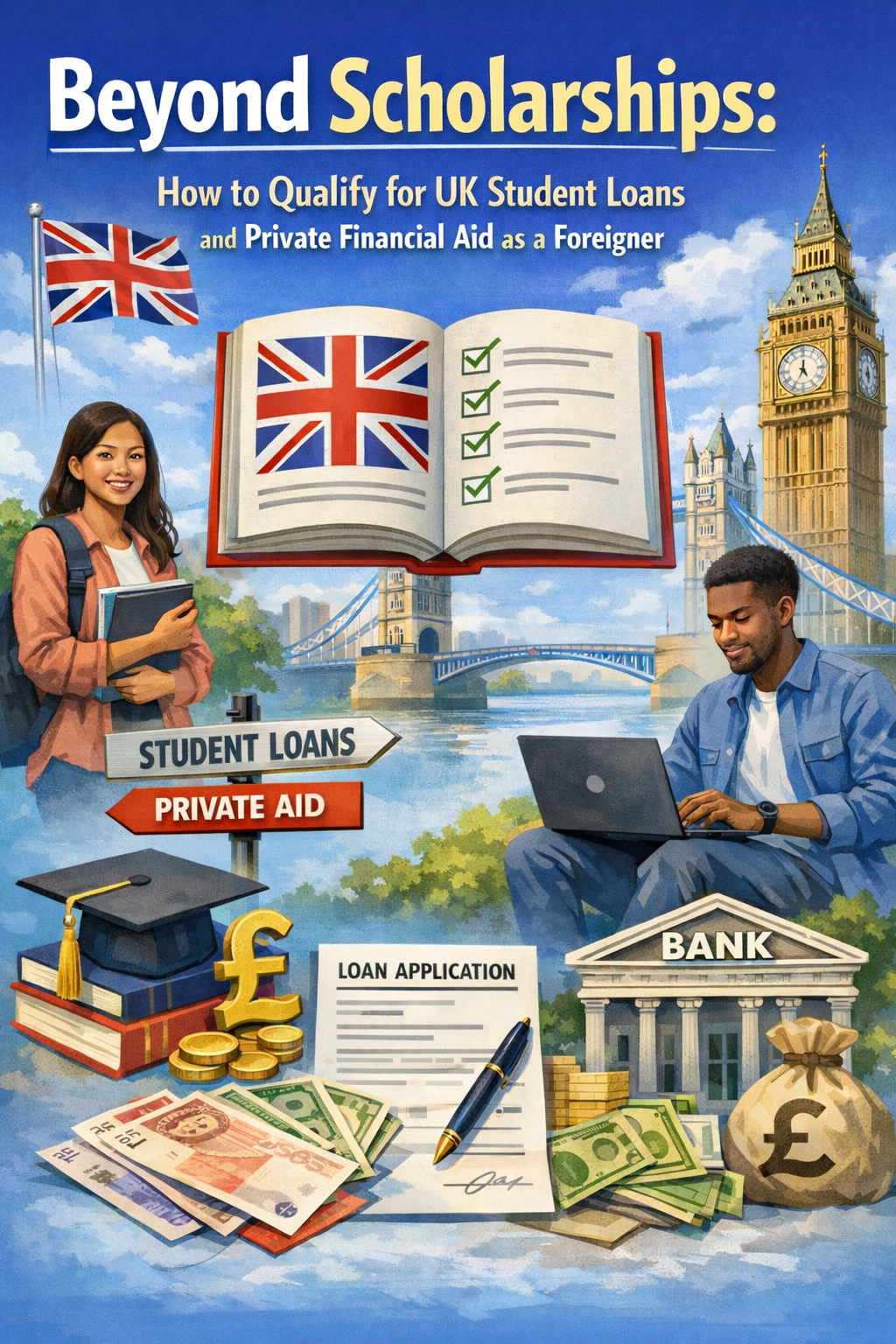
Discover practical ways international students can fund UK education beyond scholarships. Learn how to qualify for UK student loans, private education loans, bank financing, and alternative financial aid options as a foreigner.
Studying in the United Kingdom is a dream for many international students. With world‑class universities, globally recognized degrees, and access to diverse career opportunities, the UK remains one of the top destinations for higher education. However, tuition fees and living costs can be overwhelming, especially for foreigners who may not qualify for traditional government scholarships.
While scholarships are widely discussed, fewer students know about student loans and private financial aid options available to international students. This guide explores how foreigners can qualify for UK student loans, private funding, and alternative financial support in 2026 and beyond.
Why Look Beyond Scholarships?
• Limited Availability: Scholarships are highly competitive and often awarded to a small percentage of applicants.
• Partial Funding: Many scholarships cover only tuition, leaving living expenses uncovered.
• Eligibility Restrictions: Some scholarships are limited to specific countries, courses, or academic achievements.
By exploring student loans and private financial aid, international students can secure additional funding to cover tuition, accommodation, and daily expenses.
💵 UK Student Loans for Foreigners
1. Government Student Loans
• Typically available to UK nationals and EU students.
• Foreigners may qualify if they hold settled status, indefinite leave to remain, or refugee status.
• Loans cover tuition fees and living costs, repayable after graduation once income exceeds a threshold.
2. Private Student Loans
Foreigners without permanent residency can access loans through private lenders.
• Eligibility: Requires a UK‑based guarantor or co‑signer.
• Coverage: Tuition fees, accommodation, books, and living expenses.
• Repayment: Flexible repayment plans, often starting after graduation.
Popular lenders include:
• Prodigy Finance – specializes in loans for international students in postgraduate programs.
• Future Finance – offers loans to students studying in the UK, including non‑UK nationals.
• MPOWER Financing – supports international students without requiring collateral.
Private Financial Aid Options
1. University‑Based Aid
Many UK universities offer bursaries, grants, and hardship funds for international students.
• Based on financial need or academic merit.
• Can cover partial tuition or living costs.
• Application usually requires proof of financial hardship.
2. Corporate Sponsorships
Some multinational companies sponsor students in exchange for future employment commitments.
• Common in fields like engineering, IT, healthcare, and finance.
• Provides tuition coverage and sometimes living stipends.
3. Charitable Foundations
Organizations such as the British Council, Commonwealth Trust, and private charities provide grants for international students.
• Focus on leadership, community service, or specific fields of study.
How to Qualify for Loans and Aid
Step 1: Build a Strong Academic Profile
• Maintain good grades to increase eligibility for university aid.
• Highlight extracurricular achievements and leadership roles.
Step 2: Secure a UK Guarantor (if required)
• Many private lenders require a UK‑based guarantor.
• This could be a relative, friend, or professional contact residing in the UK.
Step 3: Demonstrate Financial Responsibility
• Provide bank statements, proof of income, or sponsorship letters.
• Show ability to repay loans after graduation.
Step 4: Apply Early
• Financial aid deadlines often differ from admission deadlines.
• Early applications increase chances of approval.
Step 5: Prepare a Strong Personal Statement
• Explain career goals, financial need, and how the aid will help achieve success.
High‑Paying Career Paths That Justify Loans
Foreign students often pursue degrees in fields that lead to high‑salary jobs, making loan repayment manageable.
Risks & Considerations
• Debt Burden: Loans must be repaid, often with interest.
• Currency Fluctuations: Repaying loans in GBP may be costly if your home currency weakens.
• Visa Restrictions: Some aid options require specific visa categories.
• Scams: Beware of fraudulent agencies promising guaranteed loans or aid. Always verify through official channels.
Benefits of Loans and Private Aid
• Access to World‑Class Education: Enables foreigners to study at top UK universities.
• Flexibility: Covers expenses scholarships may not.
• Career Growth: Investment in education often leads to high‑paying jobs.
• Networking Opportunities: Studying in the UK opens doors to global connections.
Can Foreigners Access UK Student Loans?
The short answer: Yes, but with limitations
The UK’s government-funded student loan system (Student Finance England, Scotland, Wales, and Northern Ireland) is primarily designed for UK citizens and residents. However, some foreign nationals and long-term residents may qualify, depending on immigration status and residency history.
Who Is Eligible for UK Government Student Loans?
Foreigners may qualify if they fall into one of the following categories:
1. Settled or Pre-Settled Status Holders
If you have Indefinite Leave to Remain (ILR) or EU Settled/Pre-Settled Status, you may be eligible for:
-
Tuition fee loans
-
Maintenance (living cost) loans
Eligibility often depends on:
-
Length of UK residence (usually 3+ years)
-
Immigration conditions allowing access to public funds
2. Refugees and Humanitarian Protection Holders
Individuals granted:
-
Refugee status
-
Humanitarian protection
may qualify for home student fees and student loans, provided they meet residency criteria.
3. Family Members of UK or Irish Nationals
Spouses, civil partners, or children of UK/Irish citizens may qualify under certain circumstances, particularly if they have lived in the UK for several years.
Important Limitation
Students on standard Student Visas (Tier 4) are generally not eligible for UK government student loans. This is why many international students turn to private and international education financing.
Private Student Loans for International Students in the UK
Private student loans are one of the most viable funding options for foreigners who do not qualify for UK government loans.
What Are Private Student Loans?
Private student loans are education loans offered by:
-
UK-based banks
-
International lenders
-
Global education finance companies
They are designed to cover:
-
Tuition fees
-
Living expenses
-
Accommodation
-
Study materials
Eligibility Requirements for Private UK Student Loans
Although requirements vary by lender, most consider:
-
Admission to a recognised UK university
-
A valid student visa
-
Academic history and course type
-
Proof of future earning potential
-
A creditworthy guarantor (often required)
Some lenders accept international guarantors, while others require a UK-based co-signer.
International Education Loan Providers (Popular with Foreigners)
Several global lenders specialise in financing international students:
Key Features Often Offered
-
Loans in GBP or USD
-
No UK credit history required
-
Flexible repayment schedules
-
Grace periods until after graduation
These loans are especially attractive for:
-
Master’s and MBA students
-
STEM and professional degree candidates
-
Students studying at top-ranked UK universities
UK Bank Loans: Are They an Option?
Most traditional UK banks:
-
Do not lend to new international students
-
Require UK residency and credit history
However, some banks may offer:
-
Student current accounts (after arrival)
-
Overdraft facilities (limited)
-
Short-term educational loans (rare cases)
In most situations, international lenders are more accessible than UK high-street banks.
University-Partnered Financial Aid Programs
Many UK universities partner with:
-
Private lenders
-
Alumni-funded loan schemes
-
International finance organisations
These programs may provide:
-
Lower interest rates
-
Deferred repayment
-
Reduced guarantor requirements
Always check your university’s international student finance office for institution-specific options.
Alternative Financial Aid Options Beyond Loans
1. Tuition Fee Instalment Plans
Many UK universities allow international students to:
-
Pay tuition in monthly or termly instalments
-
Reduce upfront financial pressure
While not a loan, instalment plans improve cash flow and budgeting.
2. Employer Sponsorship and Education Loans
Some employers:
-
Fund postgraduate education
-
Offer education loans with repayment tied to employment
This option is common for:
-
Executive MBAs
-
Professional master’s programs
3. Family-Supported Loans
Family-backed financing remains one of the most common funding routes:
-
Informal loans from relatives
-
Family property-backed education loans (in home country)
Key Documents Required for Loan Applications
Whether applying for private or international student loans, expect to provide:
-
University offer letter
-
Course details and tuition breakdown
-
Passport and visa
-
Proof of identity and residence
-
Financial statements (yours or guarantor’s)
-
Academic transcripts
Preparing these early increases approval chances.
Interest Rates and Repayment: What to Know
Interest Rates
-
Private loan interest rates vary by lender and risk profile
-
Fixed or variable options may be available
Repayment Structures
-
Immediate repayment
-
Deferred repayment until graduation
-
Grace periods (6–12 months post-study)
Always read loan agreements carefully to understand:
-
Total repayment amount
-
Penalties
-
Early repayment options
Avoiding Common Financing Mistakes
-
Borrowing without understanding total cost
-
Ignoring currency exchange risks
-
Using unregulated lenders
-
Failing to compare multiple loan offers
Responsible borrowing is essential to long-term financial stability.
Is Studying in the UK Without a Scholarship Worth It?
For many students, yes—when financed strategically.
UK degrees offer:
-
Strong return on investment
-
Post-study work opportunities (Graduate Route)
-
Access to global employers
When combined with the right financial planning, loans and private aid can make UK education both accessible and sustainable.
Final Thoughts: Build a Smart UK Study Funding Strategy
Scholarships are valuable—but they are not the only path to studying in the UK. By understanding eligibility rules, exploring private and international loan options, and leveraging university-backed financial aid, international students can unlock opportunities that once seemed out of reach.
The key is early planning, informed decision-making, and responsible financing.
📝 Conclusion
Scholarships are valuable, but they are not the only way to finance education in the UK. By exploring student loans, private financial aid, and corporate sponsorships, foreigners can secure the funding needed to pursue their academic dreams. With careful planning, strong applications, and financial responsibility, international students can access opportunities that lead to world‑class education and high‑earning careers.
Pro Tip: Always apply through official university portals and verified lenders to ensure compliance with UK laws and avoid scams.


 admin
admin